Manor Houses & Palacios of Mallorca
Seigneurial houses in the countryside and the historic palacios of Palma and the island's towns — homes built to represent a family for generations.
For centuries, Mallorca's landowning families lived between two worlds: the estate in the countryside and the family residence in town. Their houses — arched courtyards, stone staircases, high ceilings with timber beams — are among the most characterful historic homes in the Mediterranean, and only rarely come to the market.
The palacios of Palma
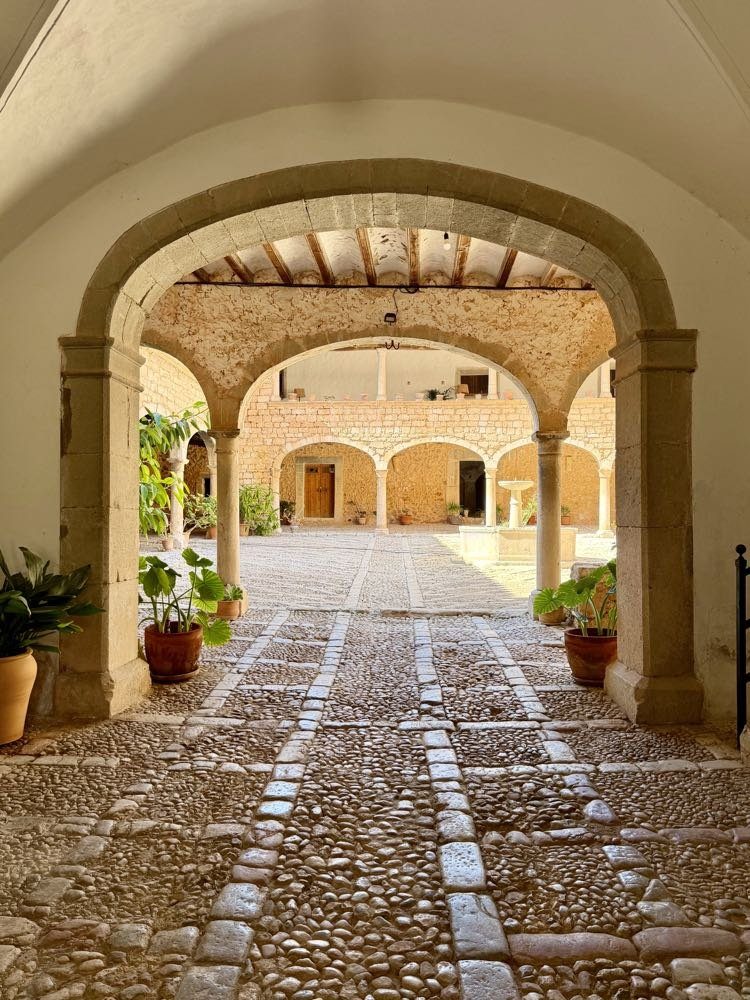
Behind the plain façades of Palma's old town lie some of the island's most remarkable houses. From the late Middle Ages to the 18th century, the noble families who owned the great rural estates built their city residences here — often on Gothic foundations, later remodelled in Renaissance and Baroque style.
The heart of every palacio is its patio: an inner courtyard entered through a wide arched gateway, with a monumental stone staircase leading up to the planta noble, the principal floor with the reception rooms. Many patios are framed by columns and arcades and still keep their original cobbled floors and wells.
Some of these houses are well known — such as Casal Solleric on the Passeig del Born, today a cultural centre open to visitors. Most, however, remain private homes, known only to those who have been invited inside.
What defines a palacio
Every house has its own history, but the authentic ones share a set of features that tell how much of their original character has survived.
Seigneurial houses in the countryside
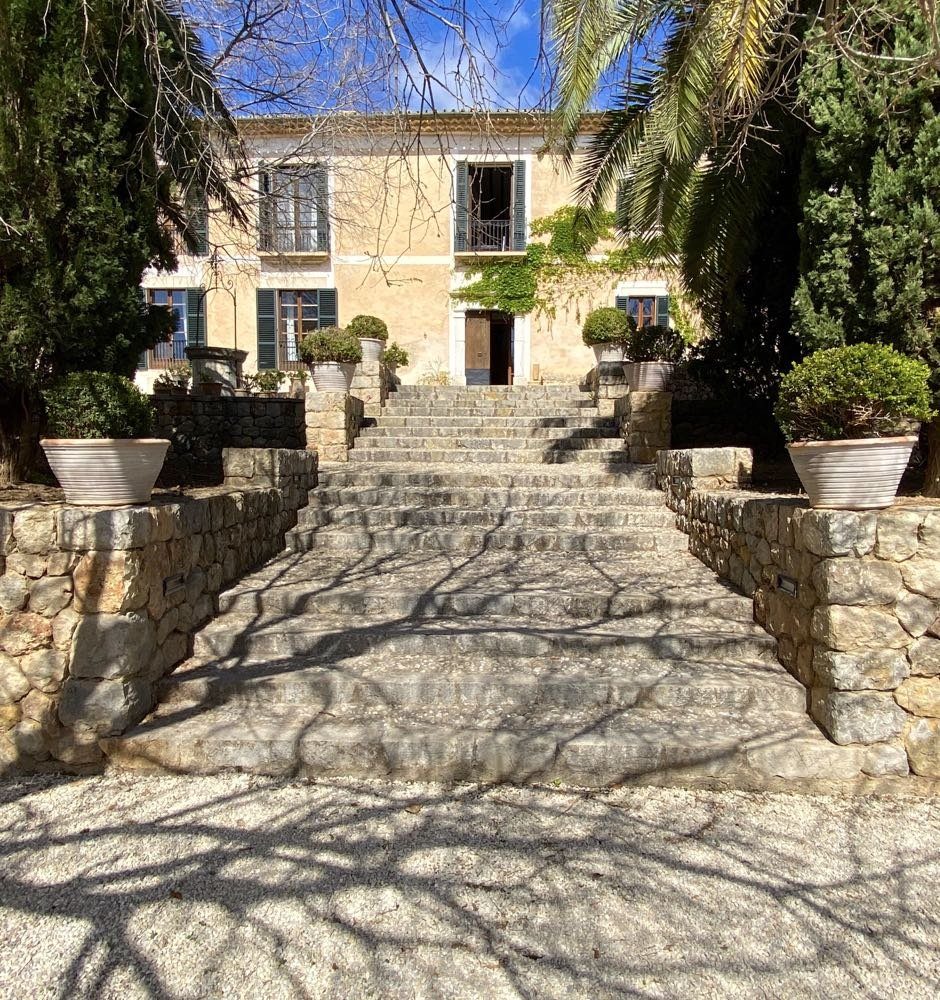
Not every historic country house is a possessió. Many manor houses stand on smaller plots or on the edge of a village, with gardens instead of farmland — yet they share the same architecture: thick stone walls, green shutters, arched doorways, terraced gardens and broad stone steps.
For many buyers they offer the ideal balance: the character and history of a seigneurial home, with a size that is easier to live in and to maintain.
Beyond Palma
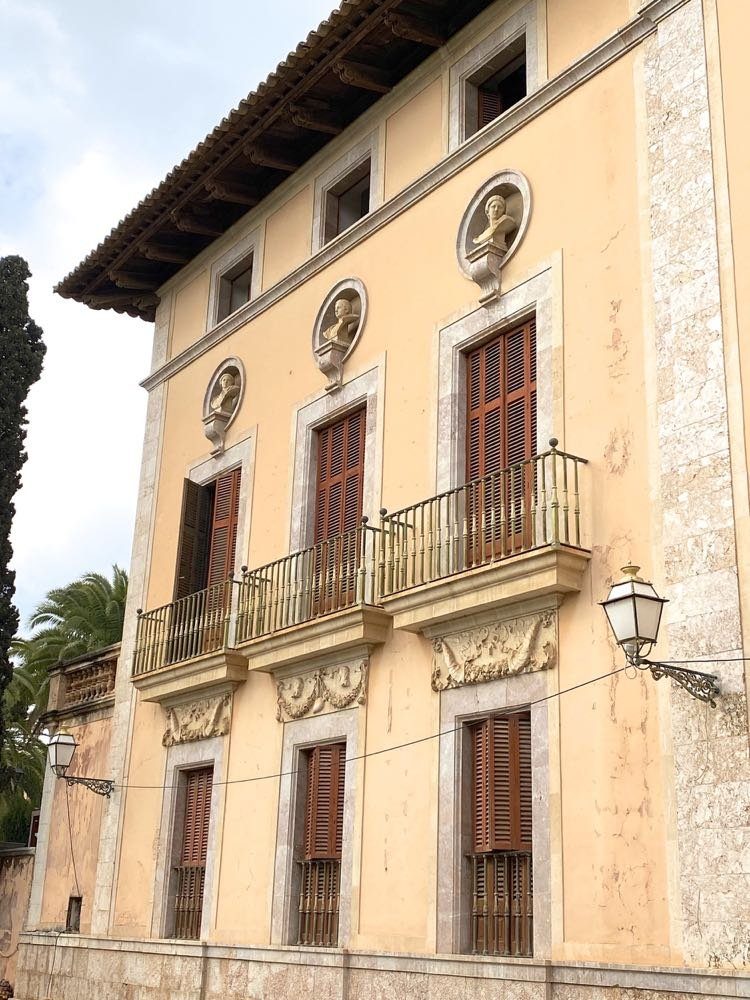
Historic town houses can be found in almost every village on Mallorca — in some more than in others. Sóller, Artà, Pollença and Santanyí are especially rich in them, but so are Llucmajor, Campos, Montuïri and many other villages across the island. Typical are wide façades on the main square or the church street, a patio behind the gate and, often, a walled garden at the back.
They combine village life with the generous proportions of a palacio — and are some of the least known treasures of the island's property market.
What buyers of a historic house should know
As with any significant property, buyer and seller are each represented by their own lawyer, and every house is reviewed thoroughly — legally and, where needed, by an architect — before signing at the notary. For manor houses and palacios, these are the points that matter most.
Behind closed doors
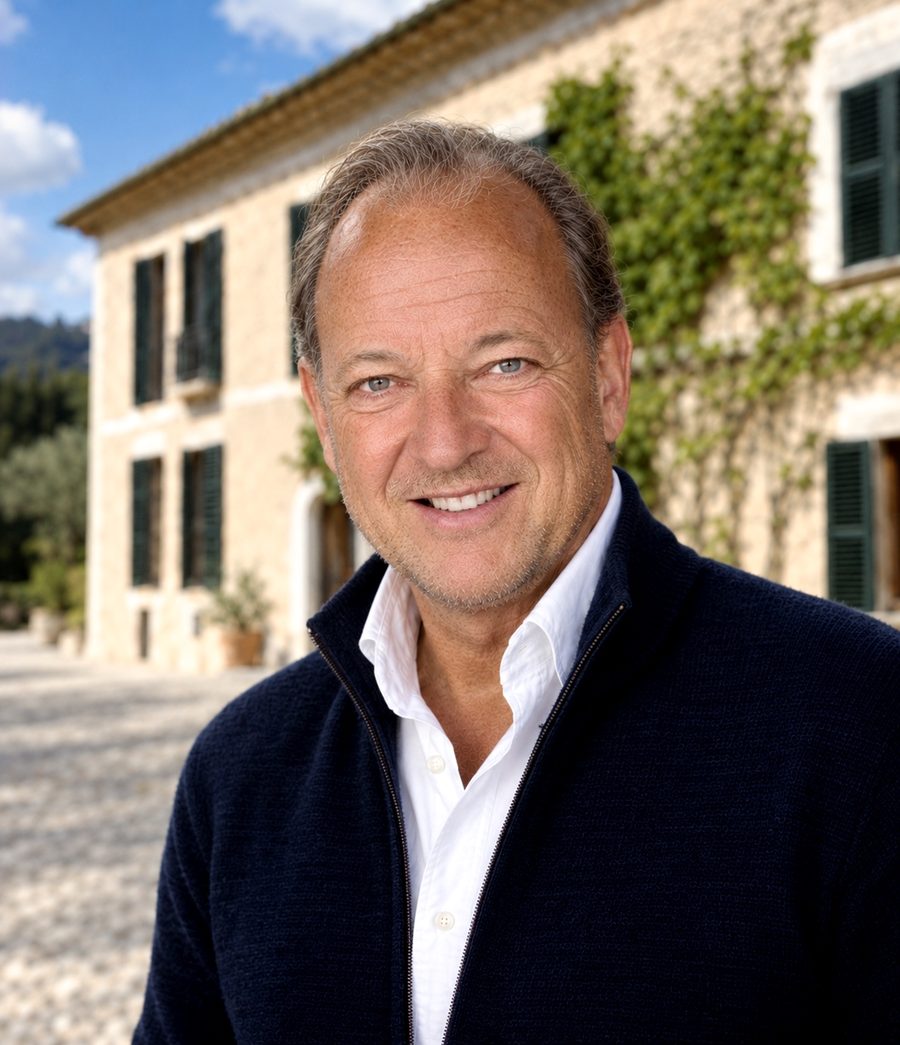
The most beautiful palacios and manor houses are rarely advertised. Their owners value discretion, and many houses change hands within a small circle. After a confidential conversation, I present suitable properties personally. For the legal and technical review, you are represented by your own independent lawyer — and if you do not yet have advisors on the island, I am happy to introduce experienced professionals I have trusted for many years.
Frequently asked
What is a palacio on Mallorca?
A palacio is a historic seigneurial town house, typically built around an inner patio with a monumental staircase. Most were the city residences of Mallorca's landowning families, above all in Palma's old town. The term casal is also used, as in Casal Solleric, though less often.
What is the difference between a manor house and a possessió?
A possessió is a complete historic estate with its own farmland and agricultural buildings. A manor house is the seigneurial house itself — in the countryside, in a village or in town — and may come with a garden rather than an estate.
Can a palacio be adapted for modern family life?
Yes. With an architect experienced in historic buildings, lifts, climate control, modern kitchens and bathrooms can be integrated while the patio, staircase and characteristic features are preserved.
Who do you work for — the buyer or the seller?
For both. My role is to bring buyer and seller together, to mediate between them and to guide the sale to a conclusion that is right for both sides — making sure the buyer is on safe ground at every step, and that the sale proceeds smoothly for the seller. Each party is legally represented by its own lawyer.
Are palacios offered on the open market?
Occasionally. The most exceptional houses, however, are usually sold discreetly, off-market, through personal contacts and trusted advisors.